When insects find their way into our homes and gardens, they can quickly become a nuisance. Flies buzzing around the kitchen, mosquitoes interrupting evenings outdoors, and ants appearing where they’re least wanted can be frustrating. However, before we declare war on all insects, it’s worth remembering that many of them play a vital role in our environment.
We sometimes include affiliate links to make sourcing products easier but we are not affilitaed with the suppliers. If you purchase a product through these links, we may earn a small commission at no extra cost to you.
The surprising benefits of insects
While some insects can be annoying, many are incredibly beneficial. Bees, butterflies, and other pollinators are responsible for helping plants, flowers, fruits, and vegetables thrive. Ladybirds help control aphid populations naturally, reducing the need for pesticides, while beetles and other insects contribute to breaking down organic matter and enriching the soil.
In fact, insects form an essential part of the food chain, supporting birds, mammals, and other wildlife. Without them, ecosystems would struggle to function properly. The goal, therefore, isn’t to eliminate insects entirely but to discourage them from entering our homes and gathering in places where they cause problems.
Here are ten simple and natural ways to deter unwanted flies and insects while still allowing nature to do its important work outdoors.
1. Keep surfaces clean
Flies and insects are attracted to food scraps, spills, and crumbs. Regularly wiping down countertops, tables, and kitchen surfaces can significantly reduce their interest in your home.
Tip: Empty rubbish bins frequently and keep lids securely closed.
2. Use natural scents that insects dislike
Many insects dislike strong natural fragrances. Consider using:
- Peppermint oil
- Lavender oil
- Citronella
- Eucalyptus oil
- Lemongrass
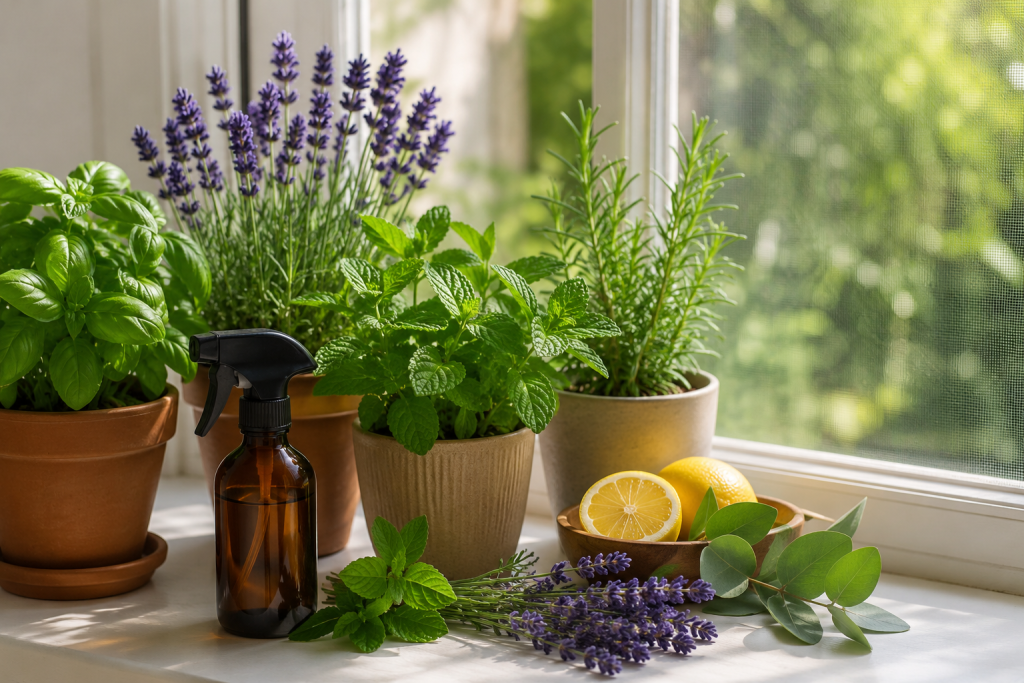
Add a few drops to a spray bottle filled with water and lightly mist around doors, windows, and outdoor seating areas.
3. Grow insect-repelling plants
Certain plants naturally help keep pests away while adding beauty and fragrance to your garden. Popular choices include:
- Basil
- Mint
- Lavender
- Rosemary
- Marigolds
Position them near windows, doorways, patios, or outdoor dining areas.
4. Install fly screens
Fly screens on doors and windows create an effective physical barrier that prevents insects from entering while still allowing fresh air to circulate throughout your home.
Magnetic fly screen door with stay-open buckles.
5. Remove standing water
Mosquitoes and other insects breed in stagnant water. Regularly inspect:
- Plant pots and saucers
- Bird baths
- Gutters
- Buckets and containers
Refreshing or removing standing water can dramatically reduce insect breeding opportunities.
6. Use fans outdoors

Flies are surprisingly poor fliers. A simple fan can create enough airflow to make it difficult for them to land, making outdoor meals and gatherings more enjoyable.
7. Store food properly
Keep food covered whenever possible, especially when dining outdoors. Use airtight containers and avoid leaving fruit, pet food, or sweet drinks exposed for long periods.
8. Create a natural fly trap
A simple homemade trap can help reduce fly numbers indoors.
Mix:
- Apple cider vinegar
- A small drop of washing-up liquid
Place the mixture in a shallow container. The vinegar attracts flies while the soap prevents them from escaping.
9. Seal entry points
Small gaps around windows, doors, pipes, and vents provide easy access for insects. Sealing these openings can significantly reduce the number that enter your home.
10. Keep your garden well maintained
Overgrown vegetation, piles of garden waste, and dense shrubbery can provide ideal hiding places for insects. Regular pruning and tidying can help make your outdoor space less attractive to pests.
Finding the right balance
Insects have been part of Earth’s ecosystems for millions of years and provide countless environmental benefits. By using natural deterrents and sensible preventative measures, we can minimise unwanted visitors in our homes while continuing to support the beneficial insects that help our gardens, wildlife, and environment thrive.
A balanced approach allows us to enjoy comfortable living spaces without disrupting the important role insects play in the natural world.
Leave a Reply