Soap scum is one of the most common causes of cloudy shower screens and glass doors so most people want to know how to remove soap scum from shower glass. It forms when soap combines with minerals found in hard water, leaving behind a stubborn white film that can make even a clean bathroom look dirty.
The good news is that soap scum can usually be removed using simple household products. Understanding why these cleaning methods work can also help you choose the most effective solution for your shower glass.
Quick answer: How do you remove soap scum from shower glass?
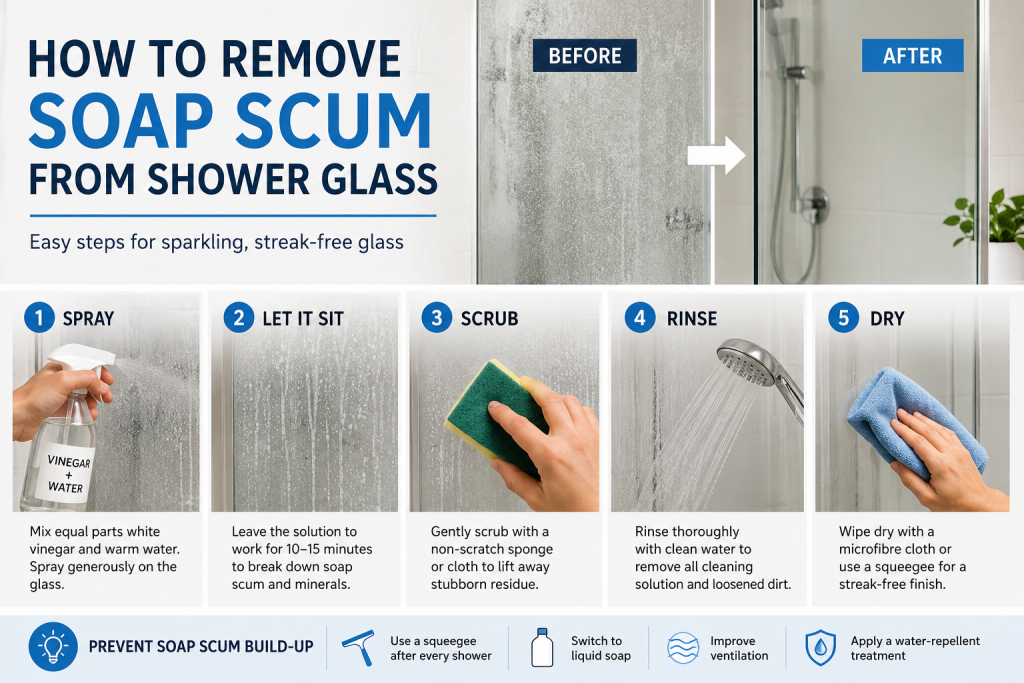
The easiest way to remove soap scum from shower glass is to spray the surface with a mixture of equal parts white vinegar and warm water. Leave it for 10–15 minutes, wipe with a microfibre cloth, rinse thoroughly and dry. Vinegar works because its mild acidity helps dissolve the mineral deposits and soap residue that cause cloudy glass.
What is soap scum and why does it form?
Many people assume soap scum is simply leftover soap, but it is actually a combination of:
- Soap residue
- Body oils
- Dirt and grime
- Calcium and magnesium from hard water
When soap reacts with these minerals, it creates an insoluble film that sticks to glass surfaces. Each shower leaves behind a tiny amount of residue, and over time these deposits build up into the cloudy layer commonly known as soap scum.
Hard water areas often experience more severe build-up because there are higher levels of dissolved minerals in the water supply.
Why shower glass becomes cloudy
Cloudy shower glass is usually caused by two separate issues:
Soap scum
This appears as a hazy film that develops gradually across the surface.
Hard water deposits
These are mineral deposits left behind when water evaporates. They can create white spots, streaks and a rough texture on the glass.
In many bathrooms, both problems occur at the same time.
Best ways to remove soap scum from shower glass
White vinegar and water solution
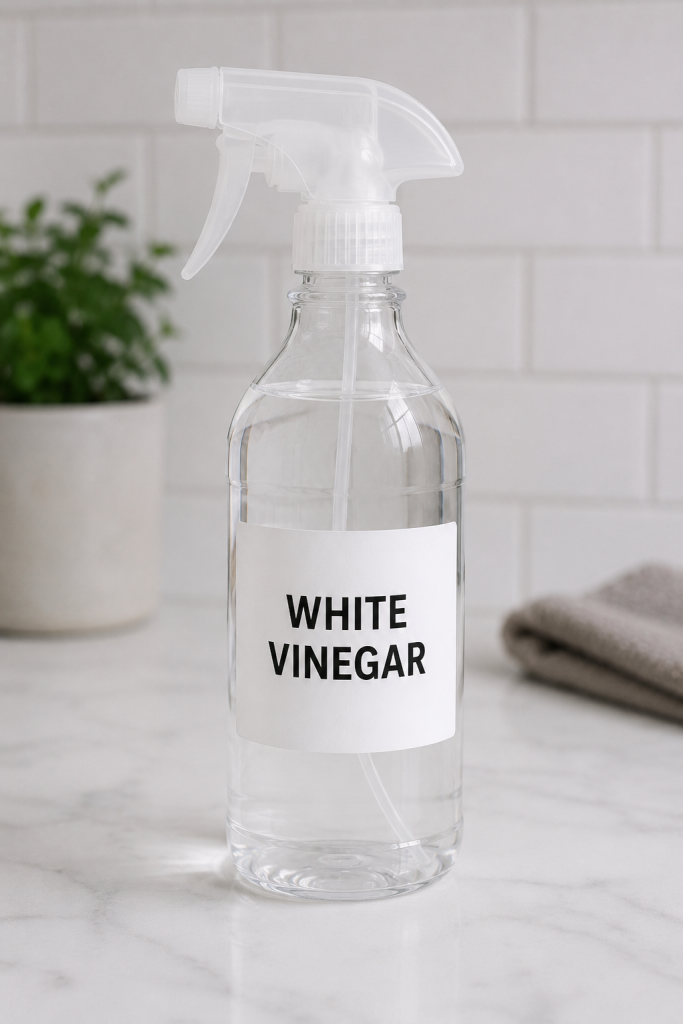
White vinegar is one of the most effective natural cleaners for shower glass.
Why it works
White vinegar contains acetic acid, a mild acid that reacts with alkaline mineral deposits such as calcium and magnesium. This helps break down the bonds holding the soap scum to the glass surface.
The acid also softens hard water deposits, making them easier to wipe away.
What you’ll need
- White vinegar
- Warm water
- Spray bottle
- Microfibre cloth
Method
- Mix equal parts white vinegar and warm water.
- Spray generously onto the shower glass.
- Leave for 10–15 minutes.
- Wipe clean using a microfibre cloth.
- Rinse and dry thoroughly.
Warm vinegar often works better than cold vinegar because heat helps soften stubborn deposits and speeds up the cleaning process.
Vinegar and washing-up liquid for stubborn build-up
For heavier soap scum, adding washing-up liquid can significantly improve results.
Why it works
While vinegar breaks down mineral deposits, washing-up liquid helps dissolve grease, body oils and fatty residues that are trapped within the soap scum.
Together, they tackle both the mineral and oily components of the build-up.
Method
- Warm one cup of white vinegar.
- Mix with one cup of washing-up liquid.
- Apply the solution to the glass.
- Leave for 20–30 minutes.
- Scrub gently with a non-scratch sponge.
- Rinse and dry thoroughly.
This combination is often considered one of the most effective DIY shower glass cleaners.
Bicarbonate of soda paste
Bicarbonate of soda can help remove particularly stubborn patches of soap scum.
Why it works
Unlike vinegar, bicarbonate of soda does not dissolve mineral deposits. Instead, it acts as a gentle abrasive.
The tiny particles help lift residue from the glass without causing scratches when used correctly.
Method
- Mix bicarbonate of soda with a small amount of water to create a paste.
- Apply to affected areas.
- Gently rub with a soft sponge or cloth.
- Rinse thoroughly.
- Dry completely.
Avoid aggressive scrubbing, as excessive pressure can damage protective glass coatings.
Commercial shower glass cleaners
Purpose-made shower cleaners are designed to remove soap scum, limescale and hard water stains.
Why they work
Many specialist cleaners contain acidic ingredients that dissolve mineral deposits alongside detergents that remove grease and soap residue.
These products are often faster than household remedies when dealing with severe build-up.
How to remove heavy soap scum from shower doors
If soap scum has been allowed to build up for several months, it may require repeated treatments.
Why older deposits are harder to remove
Over time, layers of soap residue and mineral deposits become compacted and adhere more strongly to the glass surface.
This makes it more difficult for cleaning solutions to penetrate the build-up.
Best approach
- Apply a vinegar and washing-up liquid solution.
- Leave for at least 30 minutes.
- Gently scrub with a non-scratch sponge.
- Rinse thoroughly.
- Repeat if necessary.
Several treatments may be required for heavily stained shower screens.
Can you use a Magic Eraser on shower glass?
Yes, but with caution.
Why it works
Magic Erasers are made from melamine foam, which acts like an extremely fine abrasive. It removes soap scum by physically lifting deposits from the glass surface.
When to be careful
Some shower screens have protective coatings designed to repel water and reduce staining. Excessive use of abrasive cleaning products may wear these coatings away over time.
Always test on a small area first.
How to prevent soap scum on shower glass
Preventing build-up is much easier than removing it.
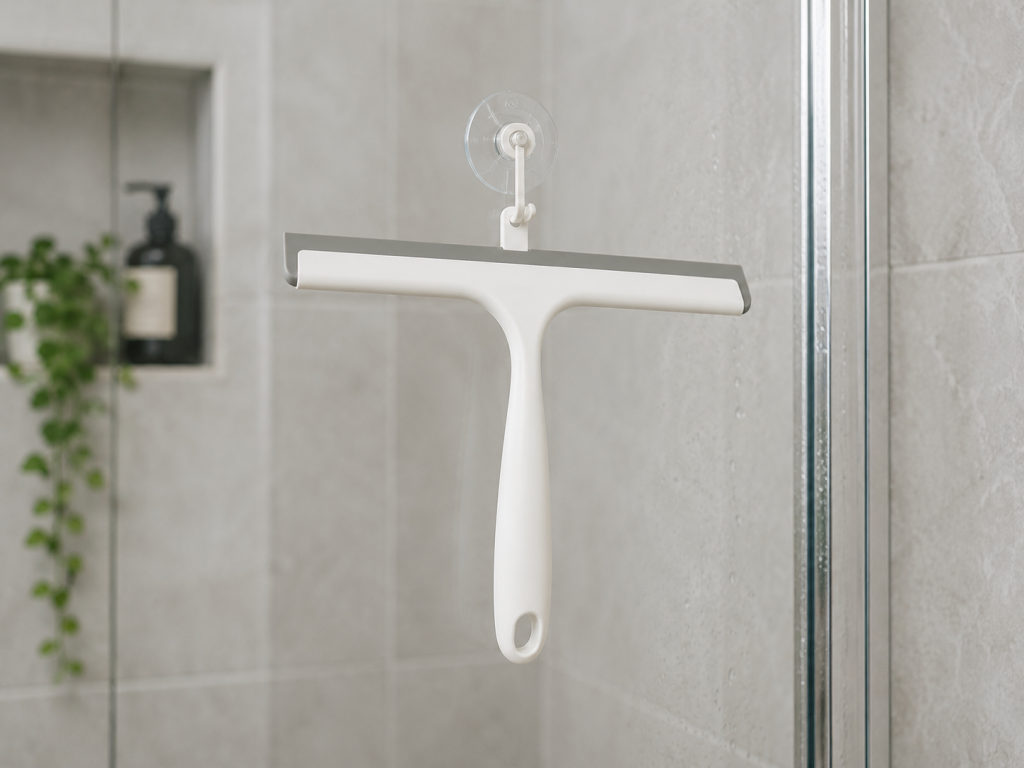
Use a squeegee daily
Why it works
Soap scum and hard water deposits can only form when water is left to dry on the glass. Removing water immediately reduces the minerals and residue left behind.
Switch to liquid soap
Why it works
Traditional soap bars contain ingredients that react more readily with hard water minerals. Liquid body wash generally leaves behind less residue.
Improve ventilation
Why it works
Better airflow helps moisture evaporate more quickly and reduces the amount of residue left on surfaces.
Apply a water-repellent treatment
Why it works
Water-repellent coatings cause water to bead and run off the glass rather than drying in place. This reduces both water spots and soap scum formation.
Clean weekly
Why it works
Regular cleaning removes deposits before they have a chance to harden and become difficult to remove.
Frequently asked questions
What dissolves soap scum on glass?
White vinegar is one of the most effective solutions because the acetic acid helps dissolve mineral deposits and loosen soap residue.
Why is vinegar better than ordinary soap?
Soap can leave behind additional residue, while vinegar actively breaks down the mineral deposits that contribute to soap scum.
Does hard water make soap scum worse?
Yes. Hard water contains calcium and magnesium that react with soap, creating thicker and more stubborn deposits.
Can soap scum permanently damage shower glass?
If left untreated for long periods, mineral deposits can etch the glass surface, making it difficult to restore completely.
Remember this
Soap scum forms because soap reacts with minerals found in hard water. Understanding this makes it easier to choose the right cleaning solution. Vinegar works because its mild acidity dissolves mineral deposits, while washing-up liquid cuts through grease and bicarbonate of soda provides gentle abrasion.
By combining the right cleaning methods with simple preventative measures, you can keep your shower glass clear, streak-free and looking like new for years to come.
(Some links might be affiliate links, in which case the website author will receive a small commission for any products bought via these links. This doesn’t affect the price you pay.?
Leave a Reply