
When it comes to making your home more comfortable, most people focus on heating, insulation, fans, or dehumidifiers. But before you can improve your home’s environment, it helps to understand what’s actually happening in each room.
(As an Amazon Associate I earn from qualifying purchases. This means I may receive a commission if you buy through links in this description, at no extra cost to you.)
That’s where a simple hygrometer and thermometer can be surprisingly useful.
These small devices measure both temperature and humidity, giving you a much clearer picture of how different areas of your home behave throughout the day and across the seasons. They’re inexpensive, easy to use, and can help you make better decisions about ventilation, comfort, and moisture management.
Every room is different
Many homes have rooms that vary significantly in temperature and humidity.
A loft bedroom might become uncomfortably warm during summer, while a north-facing room remains relatively cool. Bathrooms and kitchens often experience higher humidity levels than living rooms or hallways.
Without measuring these conditions, it’s easy to rely on guesswork. A room may feel stuffy, damp, or uncomfortable, but it can be difficult to know exactly why.
Using multiple hygrometers around the home can quickly reveal patterns that would otherwise go unnoticed.
Finding the coolest room in summer
During warmer weather, monitoring temperatures around the home can help identify which rooms stay coolest throughout the day.
This can be particularly useful during heatwaves, when some rooms become difficult to sleep in while others remain noticeably more comfortable.
By tracking temperatures across different rooms, you can:
- Identify the best room for sleeping.
- Find a more comfortable space for working from home.
- Understand which rooms gain the most heat from direct sunlight.
- Spot areas that may benefit from shading or improved ventilation.
Over time, you’ll build a better understanding of how heat moves through your property and which spaces are most comfortable during hot weather.
Knowing when to open and close windows
One of the most useful insights a thermometer provides is helping you decide when to ventilate your home.
It’s a common assumption that opening windows will always cool a property down. In reality, if the air outside is warmer than the air inside, opening windows may simply allow more heat into the building.
Comparing indoor temperatures with the outdoor temperature can help you decide when ventilation is likely to be beneficial.
In many homes, the most effective time to cool rooms is during the early morning or later evening when outdoor temperatures drop below indoor temperatures.
Humidity matters too
Temperature is only part of the comfort equation.
Humidity has a significant impact on how a room feels. High humidity can make warm conditions feel even more uncomfortable, while very dry air can cause irritation to the skin, eyes, and respiratory system.
Monitoring humidity levels can help homeowners understand whether a room feels uncomfortable because of temperature, moisture levels, or a combination of both.
In general, indoor humidity levels between 40% and 60% are often considered a healthy range for most homes.
Why hygrometers are particularly useful in winter
While temperature monitoring is often associated with summer comfort, humidity monitoring becomes especially valuable during winter.
As homes are heated and windows remain closed for longer periods, moisture generated by everyday activities can build up indoors.
Common sources of indoor moisture include:
- Showering and bathing
- Cooking
- Drying clothes indoors
- Kettles and boiling water
- Everyday occupancy
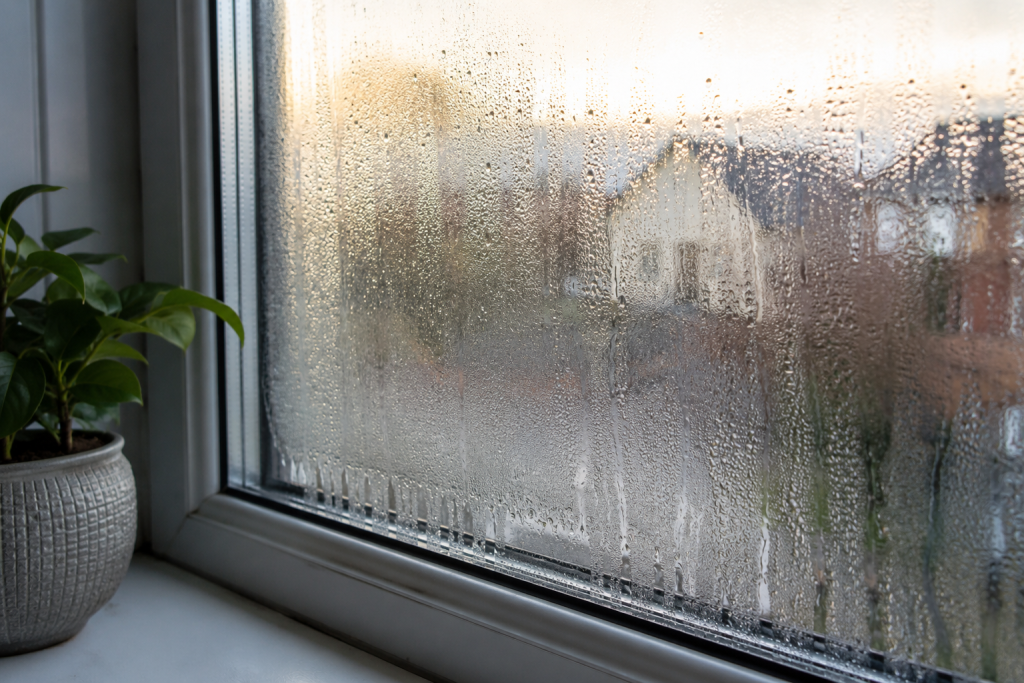
When humidity levels remain elevated, condensation is more likely to form on colder surfaces such as windows, external walls, and poorly ventilated corners.
Helping to prevent condensation and mould
One of the biggest advantages of monitoring humidity is that it can provide an early warning of conditions that may lead to mould growth.
Many people only become aware of a moisture problem once condensation appears on windows or mould becomes visible on walls and ceilings. By that stage, the issue may have been developing for weeks or months.
A hygrometer allows you to identify rooms that regularly experience high humidity levels, making it easier to improve ventilation and reduce excess moisture before problems develop.
This can be particularly useful in:
- Bathrooms
- Kitchens
- Bedrooms
- Utility rooms
- Properties with limited ventilation
Monitoring humidity won’t solve a mould problem on its own, but it can help you understand the conditions that contribute to it and whether changes to ventilation habits are having an effect.
Why multi-packs make sense
Because temperature and humidity vary so much between rooms, a single device can only tell part of the story.
Using several sensors throughout a property provides a more complete picture of how your home performs. You may discover that one bedroom is consistently warmer than the others, or that a particular room regularly experiences higher humidity levels.
Small digital hygrometer and thermometer units are widely available in multi-packs, making it practical to monitor conditions throughout the home without spending a significant amount of money.
Understanding your home better
Many home comfort and moisture issues become easier to manage once you have reliable information.
A hygrometer and thermometer won’t prevent overheating, condensation, or mould by themselves, but they can help you understand when and where these conditions are developing. That knowledge allows you to make more informed decisions about ventilation, heating, and moisture control.
Sometimes, a few simple measurements can reveal more about how your home behaves than any amount of guesswork.
Frequently Asked Questions
What is a hygrometer and what does it do?
A hygrometer measures the amount of moisture in the air, known as relative humidity. Many modern devices also include a thermometer, allowing you to monitor both temperature and humidity in the same room.
What is the ideal humidity level in a home?
Most experts recommend maintaining indoor humidity between 40% and 60%. Levels above this range can increase the risk of condensation and mould, while very low humidity can make the air feel dry and uncomfortable.
Can a hygrometer help prevent mould?
A hygrometer cannot prevent mould directly, but it can help identify conditions that allow mould to develop. Monitoring humidity levels allows homeowners to spot persistently damp rooms and improve ventilation before visible mould appears.
Where should I place a hygrometer in my home?
For the most useful readings, place hygrometers in rooms where humidity or temperature may vary significantly, such as bedrooms, bathrooms, kitchens, utility rooms, and loft spaces. Avoid placing them directly next to radiators, windows, or other heat sources.
Why is humidity important in winter?
During winter, homes are often heated while windows remain closed for longer periods. This can allow moisture from cooking, showering, and drying clothes indoors to build up, increasing the risk of condensation and mould growth.
Can a hygrometer help reduce condensation on windows?
Yes. By monitoring humidity levels, you can identify when indoor moisture is becoming excessive and take action through ventilation, heating adjustments, or using a dehumidifier before condensation becomes a problem.
How many hygrometers do I need for a house?
A single hygrometer only measures conditions in one location. Because temperature and humidity can vary significantly between rooms, many homeowners find that using multiple sensors throughout the property provides a much better understanding of how their home behaves.
Are digital hygrometers accurate?
Most modern digital hygrometers are accurate enough for everyday home monitoring. While readings may vary slightly between models, they are generally reliable for tracking trends and identifying rooms with unusually high humidity levels.
Can a hygrometer tell me when to open windows?
A hygrometer combined with a thermometer can help you make more informed decisions about ventilation. By comparing indoor temperature and humidity levels with outdoor conditions, you can identify the most effective times to open windows and improve airflow.
Is a hygrometer worth buying?
For a relatively low cost, a hygrometer can provide valuable information about temperature, humidity, comfort levels, condensation risks, and potential mould issues. Many homeowners find it one of the simplest ways to better understand their indoor environment.