
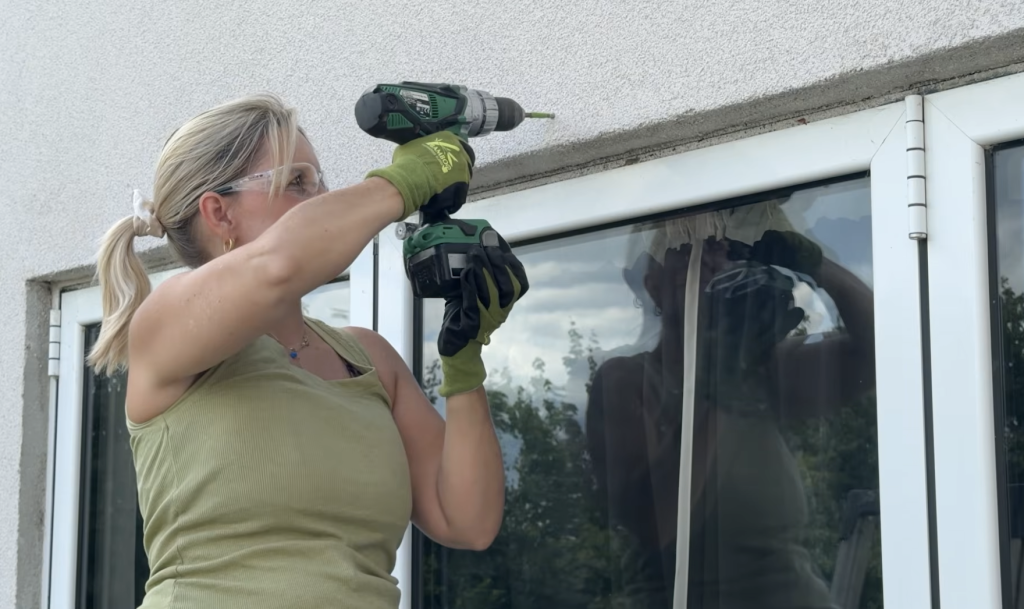
Knowing how to operate an electric drill is only half the picture. The real secret to hanging shelves, mirrors, or heavy kitchen units securely is identifying your wall system before you press the trigger.
Drilling into the wrong wall type with the wrong drill bit or plug leads to loose fixings, damaged plaster, or worse such as striking a hidden pipe or electrical wire.
Below, we break down the major UK wall types, how to identify what’s behind your plaster, and which drill bit and wall plug combination you need for a secure finish.
1. Safety first: detecting utilities behind walls
Before drilling into any UK wall surface, you must check for hidden electrical cables and plumbing pipes.
- Safe zones: As a general rule, avoid drilling directly above, below, or horizontally parallel to light switches and power sockets.
- Cable/pipe detectors: Ideally, scan the intended area with a digital multi-detector before drilling.
2. UK wall types & how to drill them
a. Solid masonry walls (brick & concrete)
Commonly found in older houses or load-bearing exterior walls.
- How to identify: Solid sound when knocked on.
- Drill bit: Masonry drill bit (features a carbide-tipped head).
- Drill setting: Rotary drill or hammer action for tough concrete.
- Wall plug: Often a standard expansion wall plug (e.g., Red No. 6 or Brown No. 8)
- Top tip: Wrap masking tape around your drill bit matching the length of the wall plug so you know exactly when to stop drilling.
b. Stud walls (plasterboard & timber frame)
Found in interior partition walls and modern home builds.
- How to identify: Knocking produces a hollow sound between studs, but a solid sound where vertical timber studs sit.
- Drilling into timber studs: The most secure fixing method. Use a wood drill bit or small pilot bit, and drive the screw directly into the wood without a wall plug.
- Fixing to hollow plasterboard: If no stud is available, use hollow wall anchors, spring toggles, or plasterboard rawlplugs to distribute the load. Avoid hanging heavy objects on plasterboard alone.
c. Dot and dab walls (plasterboard over thermalite/blockwork)
Extremely common in modern UK construction and extensions. Plasterboard is attached to Thermalite aerated blocks or brick using adhesive dabs.
- The challenge: Standard plasterboard plugs fail because there is a cavity between the board and blockwork.
- The solution: Use extra-long frame fixings or specialty masonry plugs that penetrate through the plasterboard and grip deeply into the blockwork.
d. Steel lintels (above doors & windows)
Found above window openings and bi-fold doors.
- How to identify: Resistance when attempting to drill above a window frame.
- Drill bit: HSS (High-Speed Steel) metal bit (often gold-tinted).
- Drill setting: Standard rotation (never hammer mode) at slow speeds with steady pressure.
UK wall drilling matrix
| wall type | ideal drill bit | recommended fixing | hammer mode? |
| brick / masonry | Masonry Bit | Standard Plastic Wall Plug | Yes (if tough) |
| timber stud | Wood / Metal Bit | Direct Wood Screw (No Plug) | No |
| hollow plasterboard | Standard / Wood Bit | Hollow Wall Anchor / Toggle | No |
| dot & dab block | Long Masonry Bit | Deep Masonry / Frame Fixing | Optional |
| steel lintel | HSS Metal Bit | Self-Tapping Metal Screw | No |
Frequently asked questions
How do i know what size drill bit to use with a wall plug?
Check the gauge number on the plug itself or consult the sizing guide on the packaging. For example, a standard red wall plug requires a 6mm masonry drill bit, while a brown plug typically requires an 7mm or 8mm drill bit.
Why should i drill a pilot hole first?
Drilling a smaller pilot hole increases precision, prevents plaster from cracking, and confirms what material lies behind the surface before committing to the full-size hole..
Watch the full video tutorial
Watch the step-by-step breakdown directly on YouTube: