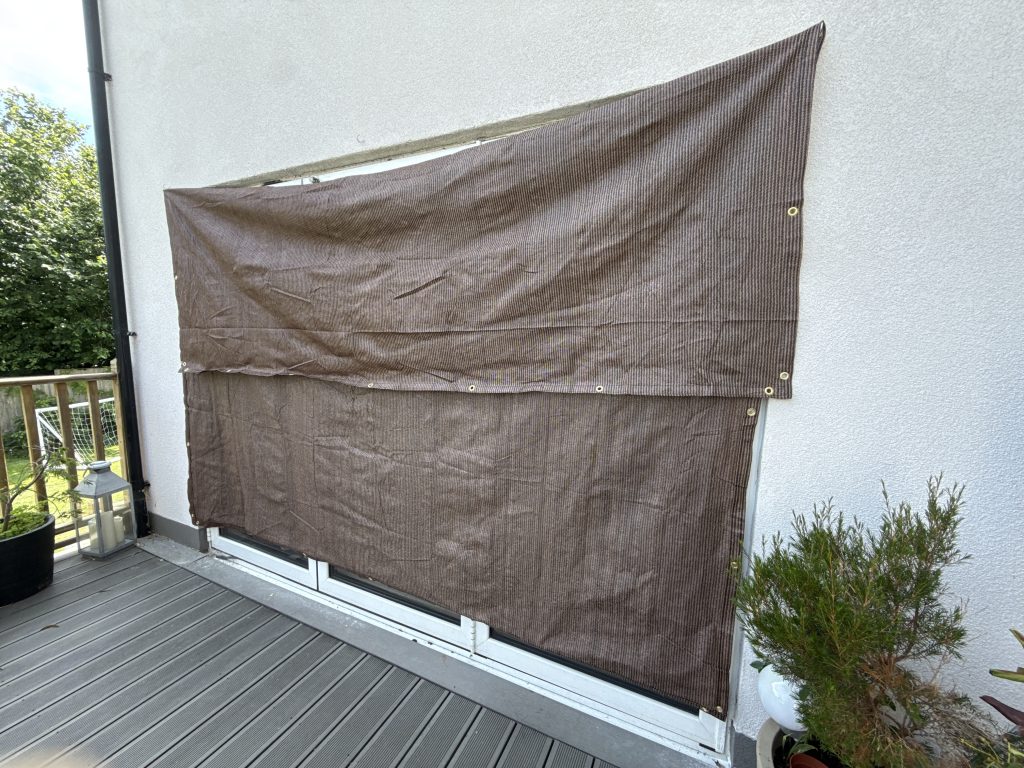
If you have large bifold doors or floor-to-ceiling windows, you’ll know just how quickly they can turn your home into a greenhouse on a sunny day.
While all that natural light is wonderful, it also allows huge amounts of solar heat to enter your home. Before long, the room becomes uncomfortable, even if you’ve closed the curtains.
After trying a few different approaches, I found a surprisingly simple and affordable solution: exterior shade cloth.
(As an Amazon Associate I earn from qualifying purchases. This means I may receive a commission if you buy through links in this description, at no extra cost to you.)
Unlike blackout blinds or the viral tin foil trick, it reduces heat before it reaches the glass while still allowing plenty of daylight into the room.
If you’d like to recreate this project, I’ve linked the products I used throughout this guide:
- 👉 Exterior Shade Cloth (affiliate link)
- 👉 Wall Plugs (affiliate link)
- 👉 Screw Hooks (affiliate link)
Why closing curtains doesn’t stop your house getting hot
Closing curtains or blinds during the day certainly helps reduce glare and prevents direct sunlight from heating your furniture and flooring.
However, there’s one important problem.
Once sunlight has passed through the glass, much of that heat is already inside your home.
The curtains simply trap extremely hot air between the fabric and the window. Eventually, that trapped heat escapes around the sides and over the top of the curtains, warming the room anyway.
That’s why rooms with large south-facing windows often still become unbearably hot, even when the curtains stay closed all day.
The best way to reduce heat through windows
The most effective solution is to stop the sun before it reaches the glass.
This is exactly why trees are so effective.
Their leaves block summer sunlight before it heats the window, while allowing more sunshine through in winter after the leaves have fallen.
Unfortunately, planting mature trees isn’t practical for many homes.
Does the tin foil window hack really work?
You’ve probably seen the viral trick of covering windows with aluminium foil.
Surprisingly…
Yes, it works.
Placed on the outside of the window, foil reflects a large amount of solar radiation away from the glass, dramatically reducing heat entering the home.
The downside is obvious:
- It blocks almost all natural light.
- It ruins your view.
- It’s not very pretty.
Important safety note
Never apply foil to the inside of double-glazed windows.
Reflecting heat back into the glass can create uneven temperatures that may cause thermal stress and, in some cases, crack the window.
If you ever use foil, it should only be fitted to the exterior.
Why I chose exterior shade cloth instead
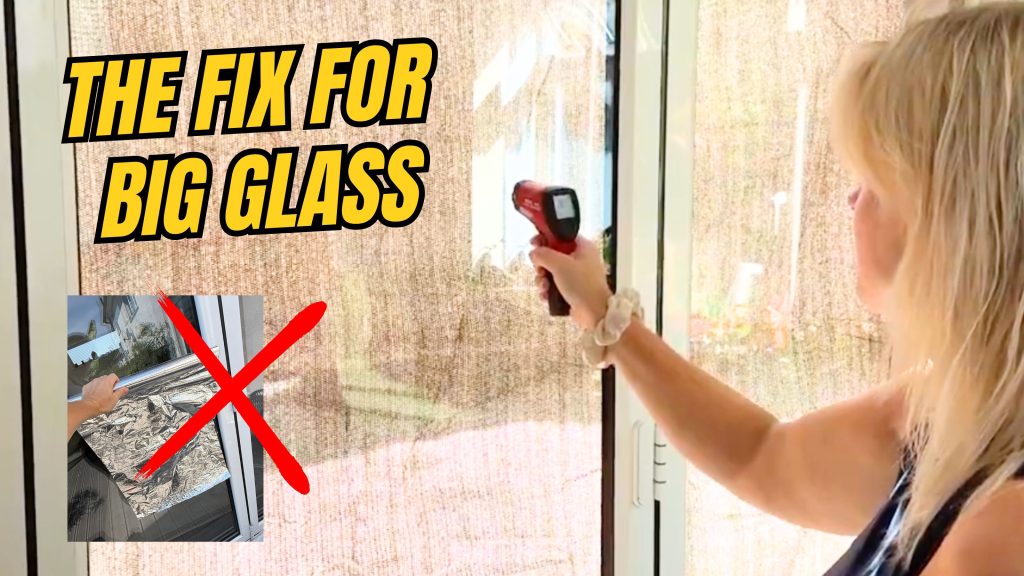
I wanted something that would:
- reduce solar heat
- sit outside the glass
- still let daylight into the room
- preserve the view
- cost very little
A viewer suggested using exterior shade cloth—the same woven mesh commonly used for greenhouses and protecting plants from intense summer sun.
It turned out to be exactly what I was looking for.
Because the fabric is a breathable mesh, it acts almost like sunglasses for your windows.
It blocks a significant amount of the sun’s heat and glare while still allowing you to see outside.
Since it’s installed outside, any heat absorbed by the fabric dissipates into the surrounding air rather than being transferred indoors.
How to install exterior shade cloth
This project only took a few minutes.
What you’ll need
- Exterior Shade Cloth (affiliate link)
- Wall Plugs (affiliate link)
- Screw Hooks (affiliate link)
- Drill
- Tape Measure
Installation steps
- Measure your window or bifold door frame.
- Choose the nearest size of shade cloth. (affiliate link)
- Drill pilot holes where required.
- Fit wall plugs if fixing into masonry.
- Screw in the hooks.
- Hang the shade cloth using the reinforced eyelets.
My shade cloth was slightly longer than needed, so I simply folded the excess over the top, giving additional protection from the strongest afternoon sun.
Does exterior shade cloth actually work?
To make the test as fair as possible, I installed the shade cloth early in the morning before the glass had warmed up.
I deliberately left part of the glass uncovered.
Using a laser thermometer, I compared both sections only a few minutes later.
The covered glass was already around 2°C cooler than the uncovered section.
Considering how slowly glass heats and cools, that was a surprisingly encouraging result.
Over the course of an entire sunny morning or afternoon, that reduction should help limit the amount of heat entering the room and improve overall comfort indoors.
Pros and Cons of exterior shade cloth
Pros
- Affordable solution
- Easy DIY installation
- Helps reduce solar heat gain
- Lets natural light through
- Maintains visibility outside
- Weather resistant
- Easy to remove when winter arrives
Cons
- Doesn’t block 100% of heat
- Requires exterior fixing points
- Appearance may not suit every property
Frequently Asked Questions
Does exterior shade cloth keep a house cooler?
Yes. Because it blocks sunlight before it reaches the glass, it reduces the amount of solar heat entering your home. Exterior shading is generally more effective than internal curtains for reducing heat gain.
Is exterior shade cloth better than curtains?
For reducing summer heat, yes. Curtains help reduce glare and direct sunlight indoors, but exterior shade prevents much of the heat from entering the building in the first place.
Can you still see through shade cloth?
Yes. Most shade cloth is made from woven mesh that allows visibility while reducing glare and blocking a percentage of sunlight.
Is shade cloth waterproof?
Most garden shade cloth is weather-resistant and designed to remain outdoors throughout the growing season. It’s intended to withstand rain, wind and UV exposure.
Does shade cloth block all sunlight?
No. Different products have different shade ratings, commonly between 30% and 90%. Higher percentages provide more cooling but also reduce more light.
Final thoughts
For such an inexpensive project, I was genuinely impressed by the results.
It’s simple to install, more attractive than covering your windows with foil, and still lets you enjoy your garden view while helping reduce the heat entering your home. It’s also portable so you can cover different windows at different times of the day.
If you want an affordable way to make large bifold doors or patio windows more comfortable during hot weather, exterior shade cloth is definitely worth considering.
Products used
- 🌞 Exterior Shade Cloth (affiliate link)
- 🔩 Wall Plugs (affiliate link)
- 🪝 Screw Hooks (affiliate link)
Have you tried shading your windows from the outside? Let me know what worked for you in the comments—I always enjoy hearing about different DIY solutions.
See my How to use a drill for beginners guide for more guidance on using a drill.
Leave a Reply